Mamie Eisenhower, Katherine Marshall, and Beatrice Patton reluctantly stepped out into the limelight during WWII, supporting the war effort as they had supported their husbands for decades. As Beatrice once told a reporter, “There is no career, except that of a minister’s wife, in which a woman can be more of a help, or a detriment, to her husband than that of an Army wife.”
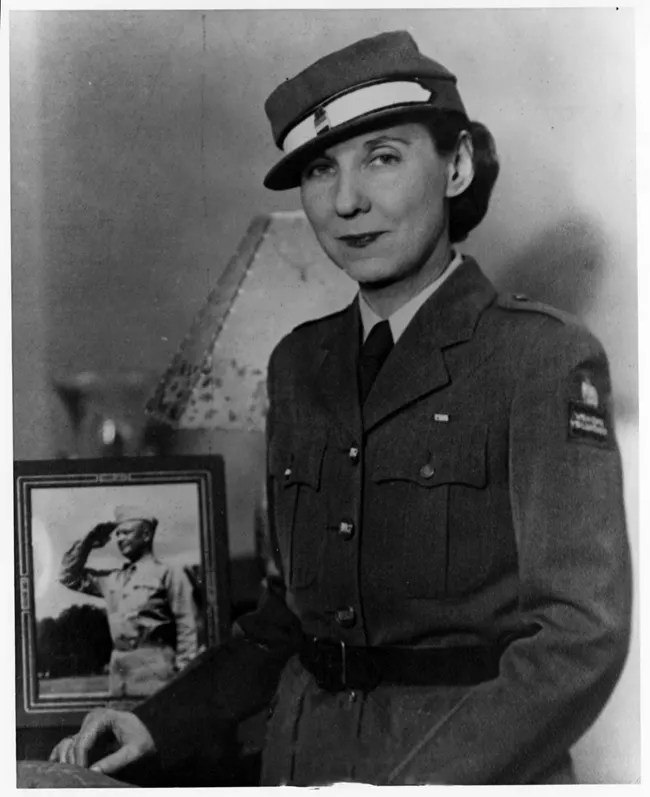 Mary Geneva “Mamie” Doud, daughter of a successful meatpacking executive, born in 1896, spent a privileged childhood in Iowa, Colorado, and Texas, where she met Dwight D. Eisenhower at Fort Sam Houston in October 1915. All Mamie wanted was to marry the second lieutenant, even if it meant giving up the luxurious lifestyle she was accustomed to. Mr. Doud consented to the match but refused to give his daughter an allowance. Henceforth, Mamie would run the couple’s finances, a practice dominated by frugality that would continue even in the White House.
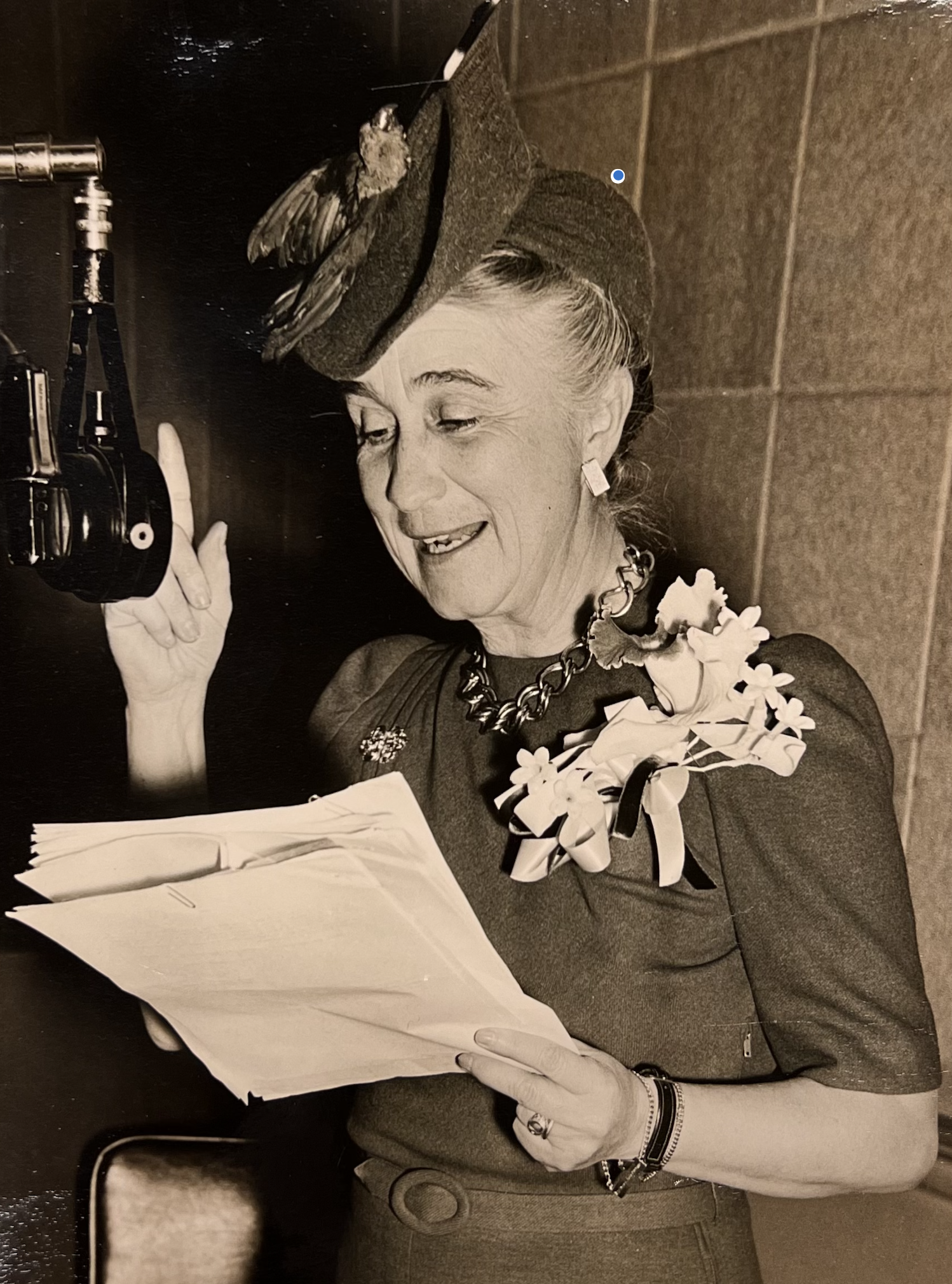 Beatrice Banning Ayer Patton, born in 1886, was the daughter of industrialist Frederick Ayer and actress Ellen Banning. She spent her childhood in Massachusetts, Europe, Egypt, and California, where she met George Patton. Beatrice was determined to make the seventeen-year-old her husband and spent the next eight years courting him. While her father liked Patton, the man, but not Patton, the soldier, he eventually agreed to the match, telling his future son-in-law that, henceforth, he, Frederick, would earn the money while he, George, would earn the glory.
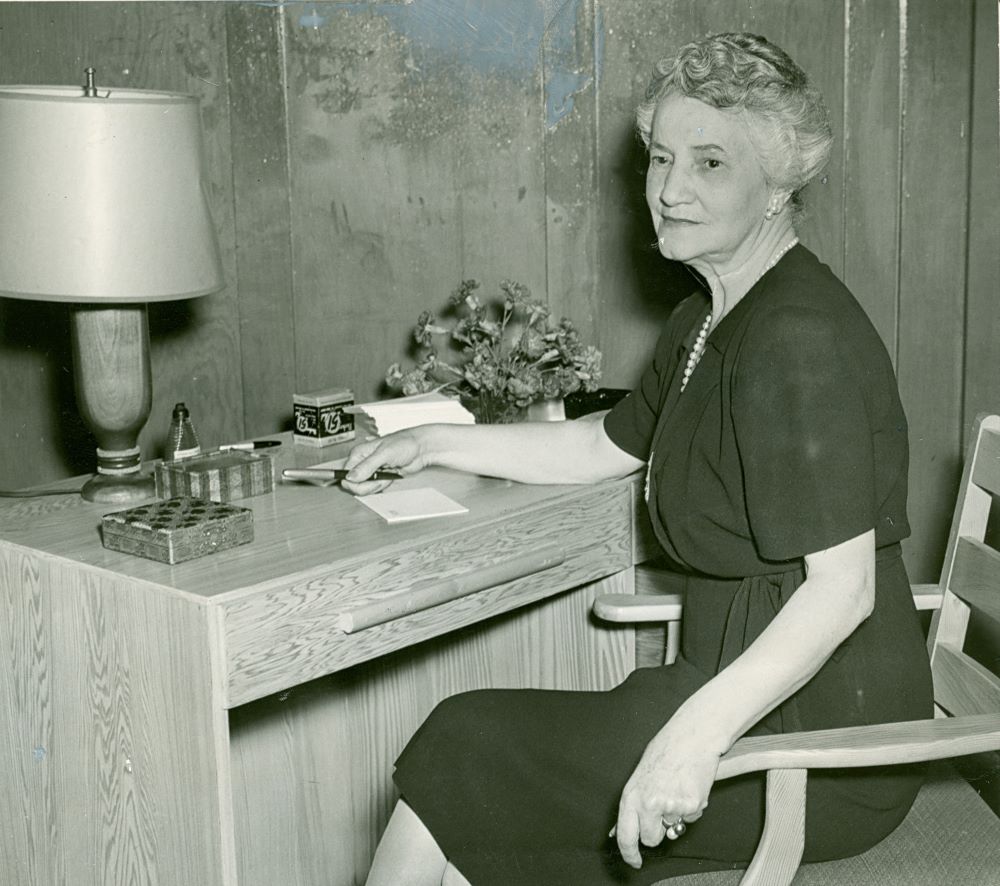 Katherine Tupper Brown Marshall, was born in Harrodsburg, Kentucky, to Reverend Henry Allen Jr. and Marie Pender in 1882. She attended Hollins Institute in Virginia and the American Academy of Dramatic Arts in New York before moving to England to pursue an acting career. While her father opposed her chosen profession, her health ultimately took her off the stage and back to the United States in 1905. After her first husband was shot outside his office by a disgruntled client in 1928, she married George Marshall in 1930.
While none of these women were Army brats, their upbringing prepared them well for marriage to career officers. When the world was at peace, entertaining the powerhouses of Washington and the most important people on any post became second nature to all three of them. As their husbands rose in rank, so did their social obligations. With the outbreak of war in 1941, the jobs they had performed privately were suddenly magnified onto the world stage.
Mamie, Katherine, and Beatrice became well-versed in public relations, answering correspondence and fielding questions from reporters. Whether they were caught up in glory or controversy, they maintained their dignity, demonstrating their resilience and determination. While all three officers relied on the support of their wives, Katherine was the only one who could provide that support in person. Mamie saw her husband twice during the war, while Beatrice didn’t see her husband at all, a separation of close to three years.
Despite being married to Generals, they grappled with the same issues as everyone else, from the constant fear of losing their husbands and lack of information to the problems of transportation and rationing. While they shared many wartime experience, Mrs. Eisenhower, Patton, and Marshall each had their own issues to contend with; for example, Beatrice and Katherine never had to worry about housing, while Mamie was often at the mercy of friends to find a roof over her head.
They unanimously agreed that keeping busy was the best way to keep the gloom at bay. Besides keeping their families together–not only their husbands, but also their sons were in the military–they were accomplished volunteers who supported the war on the home front. Mamie became a volunteer for the Red Cross and the Army Relief Society, United Service Organization, and American Women’s Volunteer Service and Katherine joined the board of the American Red Cross, Army Emergency Relief, and the Soldiers, Sailors, and Marines Club. Beatrice toured the country selling war bonds and became a public speaker for the War Department, often addressing the women of France.
When Mamie once said that her husband “was her career,” she might as well have been speaking for Beatrice and Katherine. Without a doubt, Generals Eisenhower, Patton, and Marshall attained the success they did in part because of their wives, and this unwavering support continued after the war. While Mamie and Katherine followed their significant others—to China and the White House, among other places—Beatrice dedicated herself to securing George’s legacy after his untimely death.
While the number of military history books written can probably fill an arsenal, the stories of the strong women behind these successful men have been largely ignored. It is time that changed, one story at a time, as we uncover and appreciate the significant, yet often overlooked, contributions of Mamie, Katherine, Beatrice, and the millions of Army wives. As Beatrice once told a group of Army wives, “How high can a kite soar without its tail?”
 Minnegate Press
Leave a Reply